

The age-old problem of school uniform rages on. Undoubtedly, if you teach DT/Textiles, you have at some point repaired a blazer or jumper and even hot glued some shoes. I certainly have. I’ve replaced zips in skirts, sewn on a million buttons and repaired hundreds of blazers, they’re expensive and not always that well made. Awful shiny polyester with a school logo/badge, that we are all cornered into buying, there is no get out clause. You choose the school (within reason/catchment) and must adhere to their guidelines. Don’t like it? Well, you could go somewhere else. I have certainly heard that said within my school.
My own children have navigated their way through the secondary school system and pushed the boundaries of what is and what is not allowed within the confines of the school and the uniform police, and I’m sure we have all also faced the battle of safety vs uniform in the DT classroom.
TES recently reported that “Most of the nearly 6,000 secondary teachers surveyed by Teacher Tapp (54 per cent) last month wanted students to wear a smart uniform of trousers, tie and blazer”. According to the Department for Education Teacher Workforce: secondary and further education Apr 2025 “In 2023/24, there were 217,600 teachers across 3,450 secondary schools” So those reported on wanting uniform (54% of 6000 = 3240) only account for around 1.49% of the overall workforce, so I’m not sure how much weight I would give to it. Clickbait potentially, and yes, I clicked. This is in no way to undermine Teacher Tapp, I think they’re excellent, give great outlet and CPD opportunities, but rather, quite simply, some lazy reporting.
Are we really still clinging to the “sense of belonging” and “preparing our students for the world of work”?
Around 100 years or so ago, when I was forging my own path, career aspirations existed along the lines of “working in a bank”, and yes, back then it was expected to see bank clerks in a smart uniform. But those days have long since passed us by. The last time I received a cheque I didn’t even need to take it in, a simple photograph via the app was sufficient to release the funds. Even if you do find a bank that still has a branch nearby, I would doubt very much that they are in shirts/blouses and blazers.
The BBC has reported that a school in Derby has made the switch to branded items that are more suitable to students with sensory needs, ditching the traditional uniform whilst still maintaining identity. They go on to state “The average cost of a full school uniform and PE kit for a child at secondary school is £442, and is £343 for a primary school pupil, according to the latest Department for Education data.” With students being criminalised for not adhering to strict rules. Yep! White socks? See you in iso!
I spent nearly 20 years working in the world of Fashion before re-training as a teacher, I even spent several years specifically working in tailoring. We certainly sold suits, but I rarely saw someone wearing one. We can teach students about expectations without them all adhering to it. Some of my students talk about beauty school, hairdressing, and yet many fail to even brush their hair some days. We cannot simply prepare them all on appearance for every line of work.
My biggest concern, however, sits within our environmental impact. Fashion, without doubt, has one of the biggest negative impacts. The National Pupil Projections states that there are currently 3,231,858 children in secondary education, with a projected fall by 2030 to 3,135,086.
Let’s take the lesser number, and for arguments sake, looking at the figures from the report by TES above, that only 54% of those continue to buy blazers, that’s still 1,692,946 students in new uniform. A naive guestimate maybe. But every part of our school uniform is imported. Thousands upon thousands of shipping containers, plastic garments wrapped in plastic, sent on ships burning more fossil fuels. Is it not time this stopped?
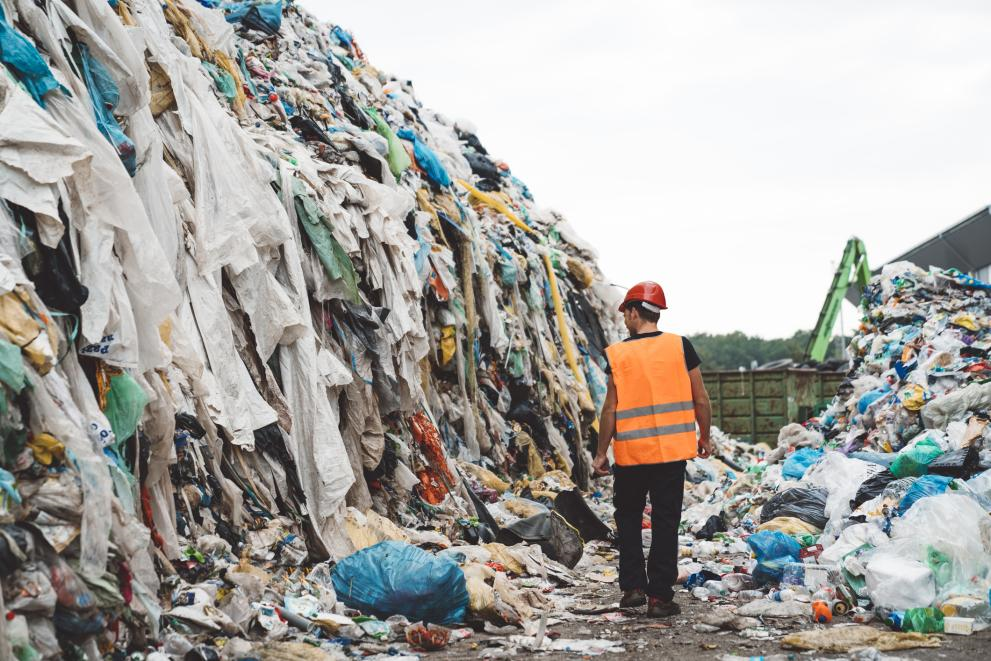
Professor Nazia Habib of Cambridge University raises concerns around the washing of each of these and the release of microplastics. I’ve seen first hand in Bangladesh, the break down of plastics cast into the streets, lining their homes, their waters and undoubtedly their food supplies. Professor Nazia Habib writes “Across the UK, more than eight million children wear school uniforms made predominantly from polyester for around 200 days each year. While this fibre is widely used for its durability and low cost, growing evidence reveals profound and interconnected risks that extend from individual children’s health to global environmental systems”. The long-term impact of wearing polyester to the extent that we do so now, cannot be sustained. Whether you agree or disagree on the impact on health, the global impact on the environment simply cannot be ignored. We do not have an infinite supply and once the blazers reach the end of their life, the only way is landfill.
As DT teachers, we talk about sustainability, about product life cycles and thoughtful design and yet here we all sit. Heck, we’ve even had assemblies on talking the students out of buying single use plastic bottles. The irony of that one was not lost on me.
Whether it’s for sensory reasons, comfort or cost, it’s time we had an overhaul. As I find so often in education, coming in from the outside world, just because it’s how it’s always been, doesn’t make it right. It’s time for change.
More information available here.
2 Responses
Test comment
Test